
Choosing where to study abroad is one of the first big decisions in the process. With so many countries and universities available, it can be easy to focus only on a country’s reputation instead of the factors that will actually affect your studies, budget and future plans.
Here’s a practical way to compare your options and choose a destination that fits your goals.
Start with the Course, Not the Country
Before comparing countries, get clear on what you want to study and at what level. A country that offers strong options for engineering may not have the same advantages for design, business or healthcare.
Start by identifying the courses and universities that interest you. Then compare which countries offer strong programs in your chosen field.
Working backwards from your course can make the decision much easier than simply asking, “Should I choose the UK, Canada or Australia?”
Compare the Real Cost, Not Just Tuition
Tuition fees are only part of the total cost of studying abroad. Accommodation, food, transport, health insurance and other daily expenses can make a significant difference to your overall budget.
When comparing destinations, check:
- Average tuition fees for your specific course and study level
- Accommodation costs in the city where you plan to study
- Food and transportation expenses
- Health insurance requirements and costs
- Currency exchange rates and how they may affect your budget
A university with lower tuition may not always be cheaper overall if living costs in its city are significantly higher.
Check Intake Seasons and Application Timelines Early
Application timelines vary between countries and universities. Some institutions have one main intake, while others offer multiple intakes throughout the year.
Missing an important deadline could mean waiting several months for the next opportunity.
Once you have shortlisted your universities, create a timeline covering:
- University application deadlines
- Main intake months
- IELTS, TOEFL, SAT or other test requirements
- Document preparation
- Offer and admission timelines
- Visa application requirements
Planning backwards from your intended start date can help you avoid last-minute problems.
Look at Post-Study Work and Visa Options
If you are considering working after graduation, research the current rules before choosing a destination.
Different countries have different policies covering graduate work opportunities, visa conditions and the transition from a student visa to a work visa.
These rules can change, so avoid relying only on older articles or social media posts. Always check the latest information from the relevant government department or university before making a decision.
If you’re planning to study abroad, meeting the required English proficiency score is an important step. IELTS preparation In UAE can help you build the skills and confidence needed for your target score.
Consider Culture, Climate and Lifestyle
Academic options and costs are important, but your everyday experience matters too.
Think about the type of environment where you would feel comfortable studying for several years. A large city can offer more transport options, employment opportunities and entertainment, while a smaller university town may provide a different lifestyle.
You may also want to consider:
- Climate and weather
- Distance from the UAE
- Travel costs to return home
- Size of the international student community
- Accommodation options
- City size and lifestyle
- Cultural environment
Choosing a destination that fits your lifestyle can make adjusting to a new country easier.
A Simple Checklist Before You Decide
Before choosing a country, ask yourself:
- Does it offer strong universities and courses in my chosen field?
- Can I realistically afford the total cost of studying and living there?
- Do I know the application deadlines and intake dates?
- Have I checked the required English or admission tests?
- Have I reviewed the current post-study work and visa rules?
- Would I be comfortable with the country’s climate, culture and lifestyle?
- Can I manage the distance and travel costs from the UAE?
If you can answer these questions using reliable, current information, you will have a much clearer idea of which destinations deserve a place on your shortlist.
Moving From Research to Your University Application
Choosing a destination is only the first step. Once you have shortlisted countries and universities, you may need to prepare academic documents, English proficiency test results, personal statements and visa documents.
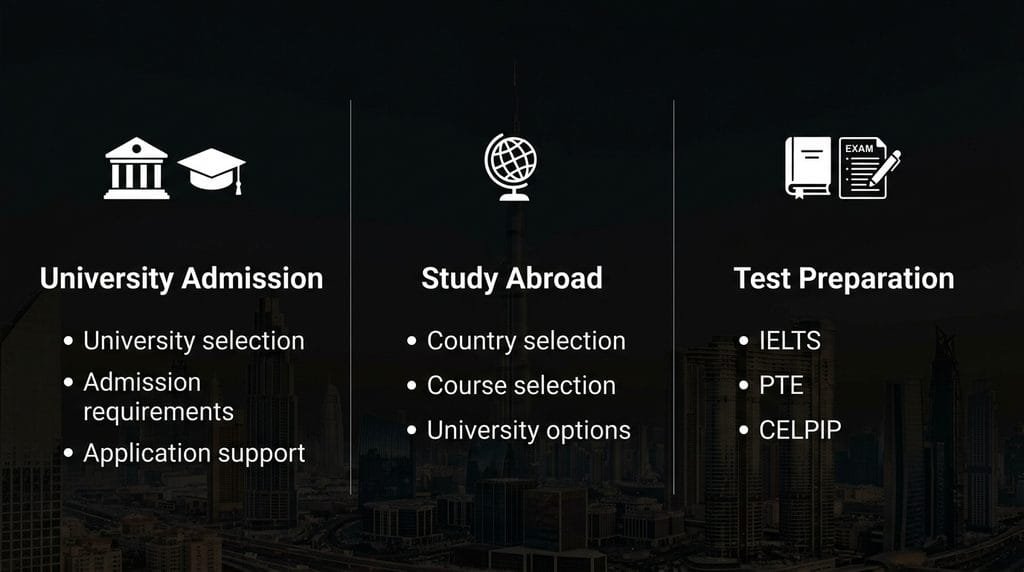
JAK Global Education supports students preparing for international study, including English proficiency test preparation and guidance related to their study plans.
For the latest requirements, always check the official university and government sources for your chosen destination.
FAQS
1. How do I choose the right country to study abroad?
Consider your chosen course, university options, total study and living costs, intake dates, visa rules, post-study opportunities and lifestyle before deciding.
2. Which factors should I compare when choosing a study destination?
Compare tuition fees, living expenses, university quality, course availability, admission requirements, visa conditions and post-study work options.
3. How much does it cost to study abroad?
The total cost depends on the country, university, course and city. Consider tuition, accommodation, food, transport, insurance and other living expenses.
4. When should I start planning to study abroad?
Start several months before your intended intake so you have enough time to research universities, prepare documents, complete required tests and meet application deadlines.
5. Should I consider post-study work options when choosing a country?
Yes. If you plan to work after graduation, check the current graduate work and visa rules for each country before making your decision.